
Multiplication games
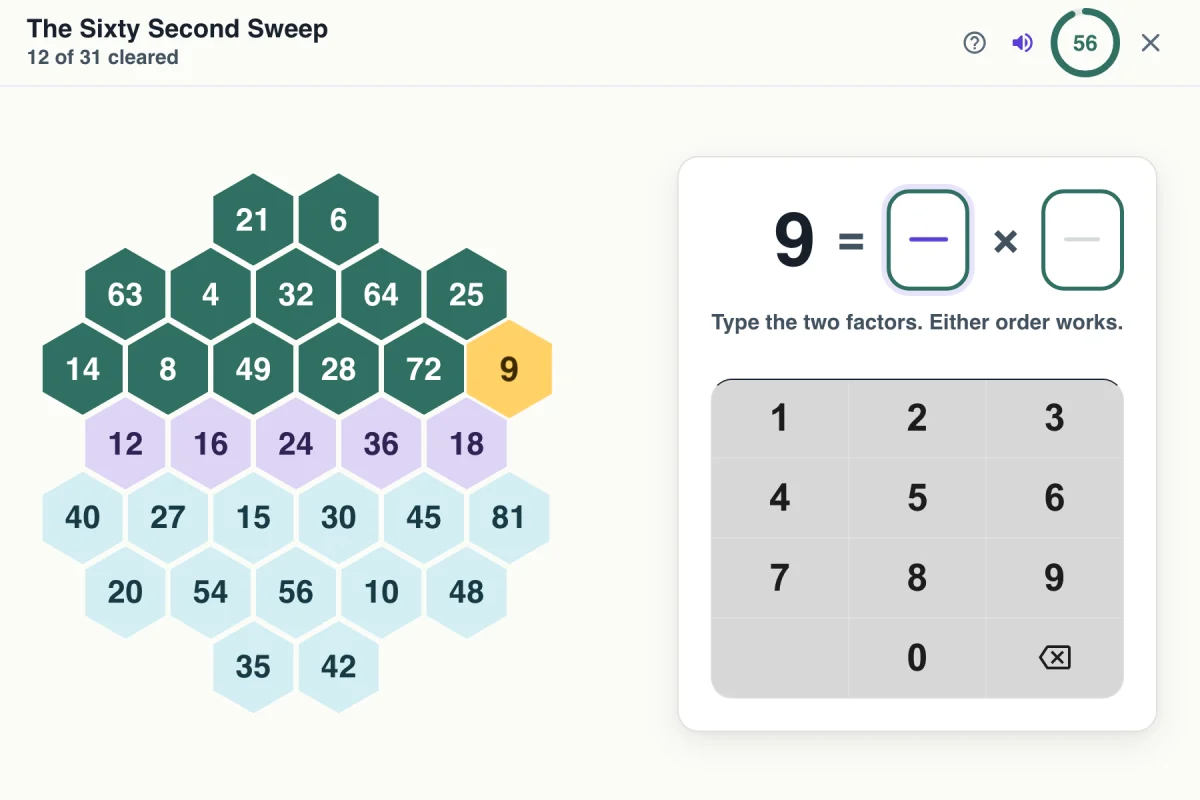
Multiplication is where Math Builders started, and it has the deepest bench: a honeycomb board to sweep in a minute, a grid with a snake on your heels, and a tank of bubbles that only stops rising once every fact pops. All three cover the full table from 2 through 9, with a 1 through 12 option in Bubble Tank for a child moving past the core facts.
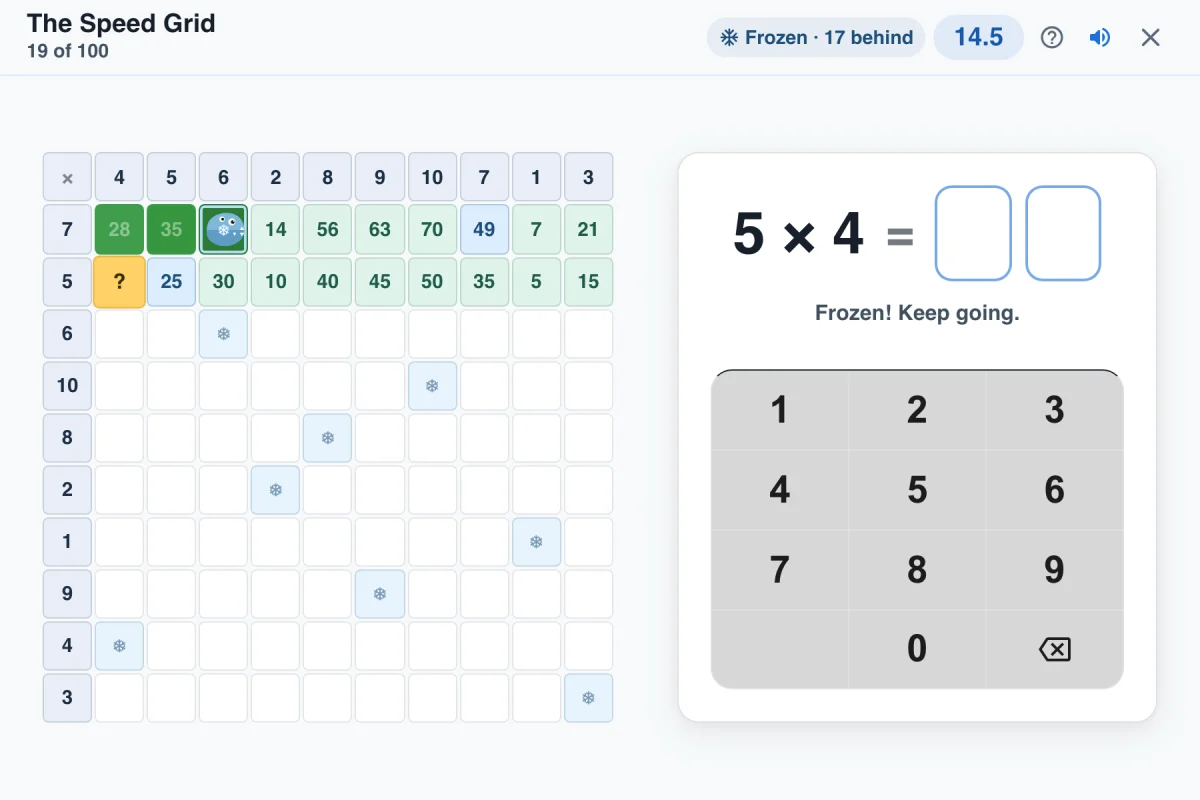
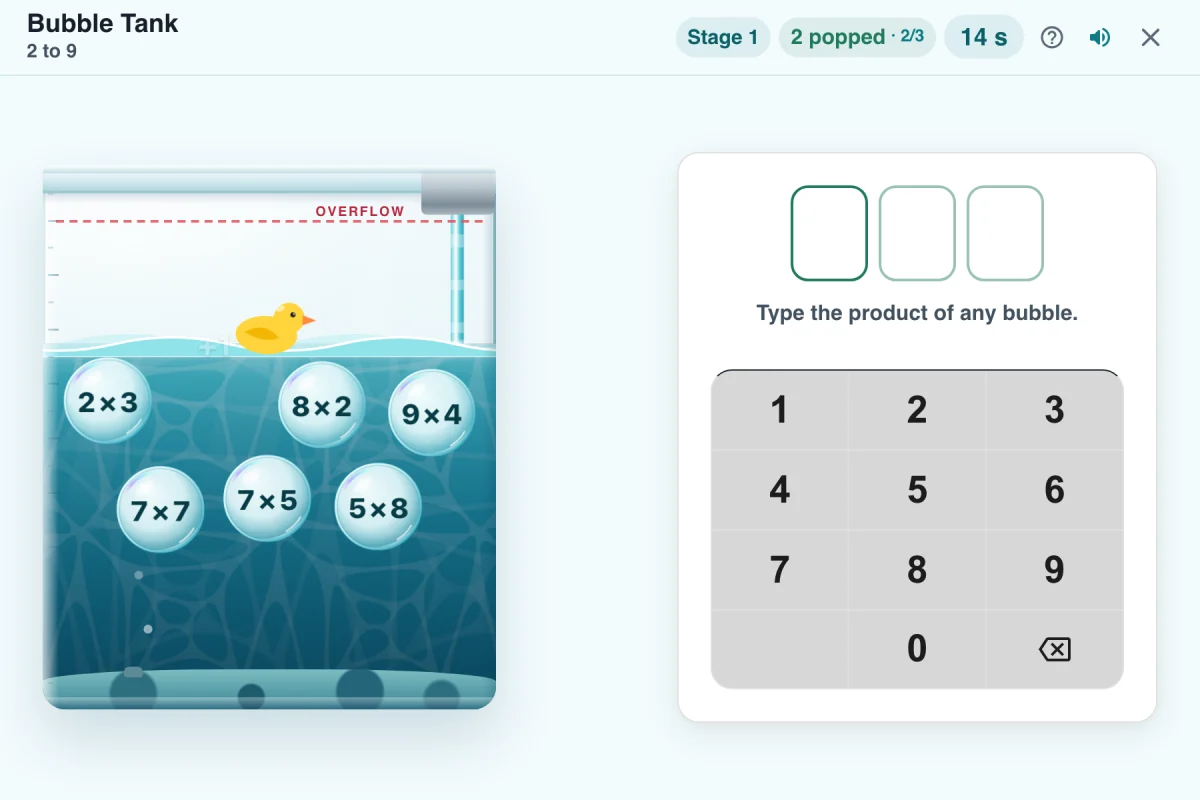
Play the multiplication games to see every game, a how-to-play walkthrough for each one, and its leaderboards.
Addition games
Addition games ask for the sum before the water rises or the snake catches up, so a child either knows 8 + 7 or feels the round get harder. Bubble Tank offers sums to 10 for a first-grader still building sums and sums to 20 for a second-grader stretching past ten, the Speed Grid runs the whole table up to 12 + 12, and each game rewards the doubles and near-doubles a child is taught to lean on.
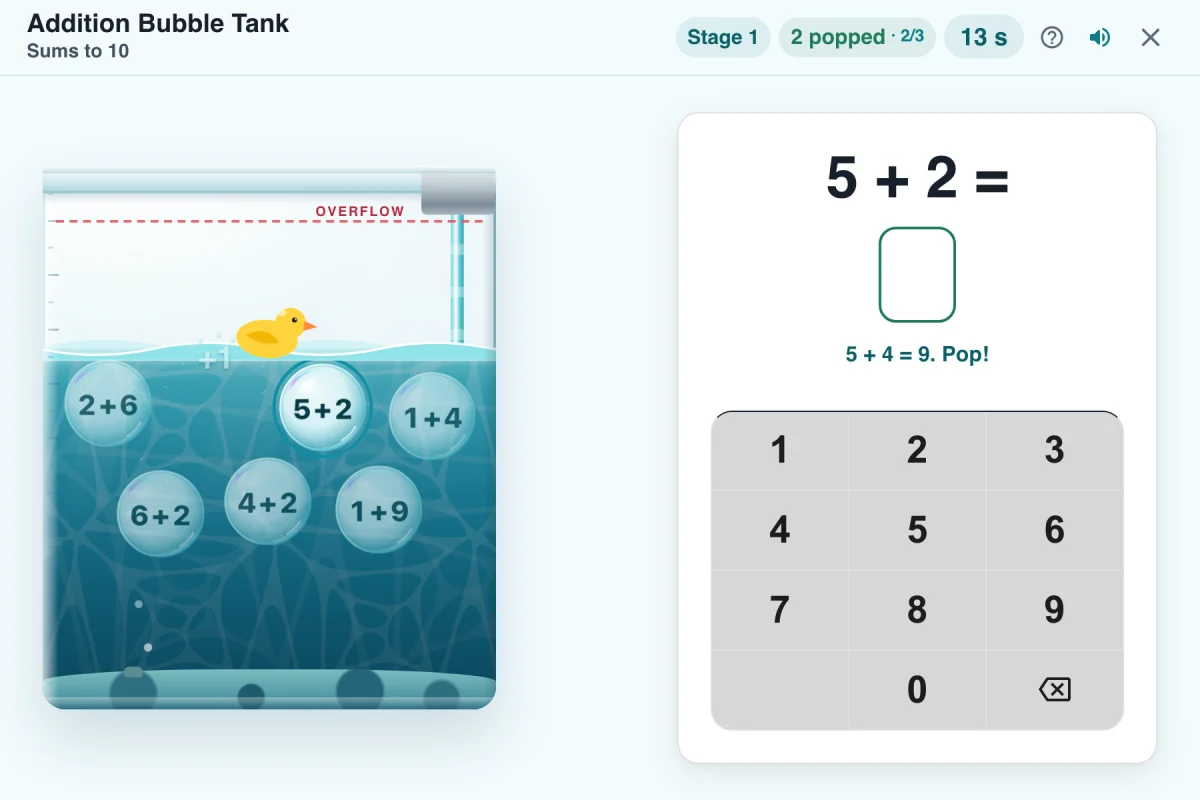
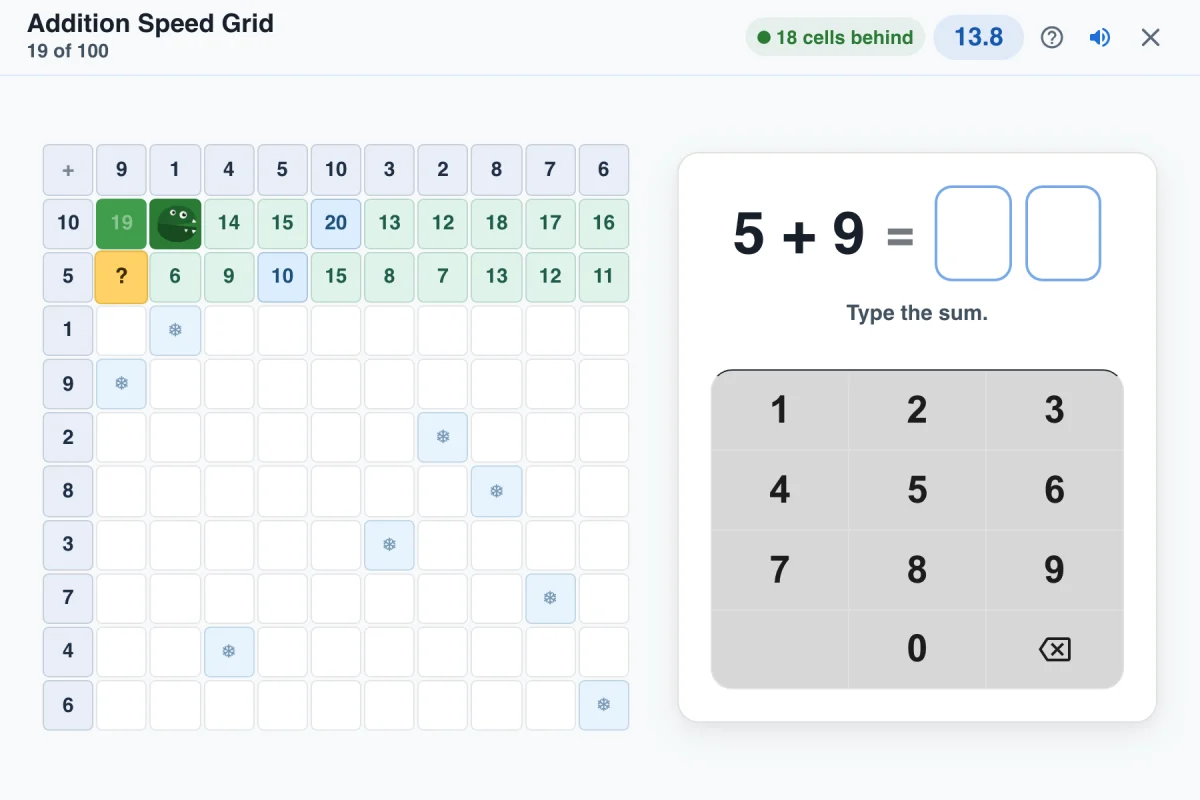
Play the addition games to see every game, a how-to-play walkthrough for each one, and its leaderboards.
Subtraction games
Subtraction games keep the same pressure but flip the question: what is left after taking away. In Bubble Tank, a within-10 set suits a child still counting back on fingers, and a within-20 set matches the take-away partners of the addition facts they already know, so the two operations reinforce each other round after round.
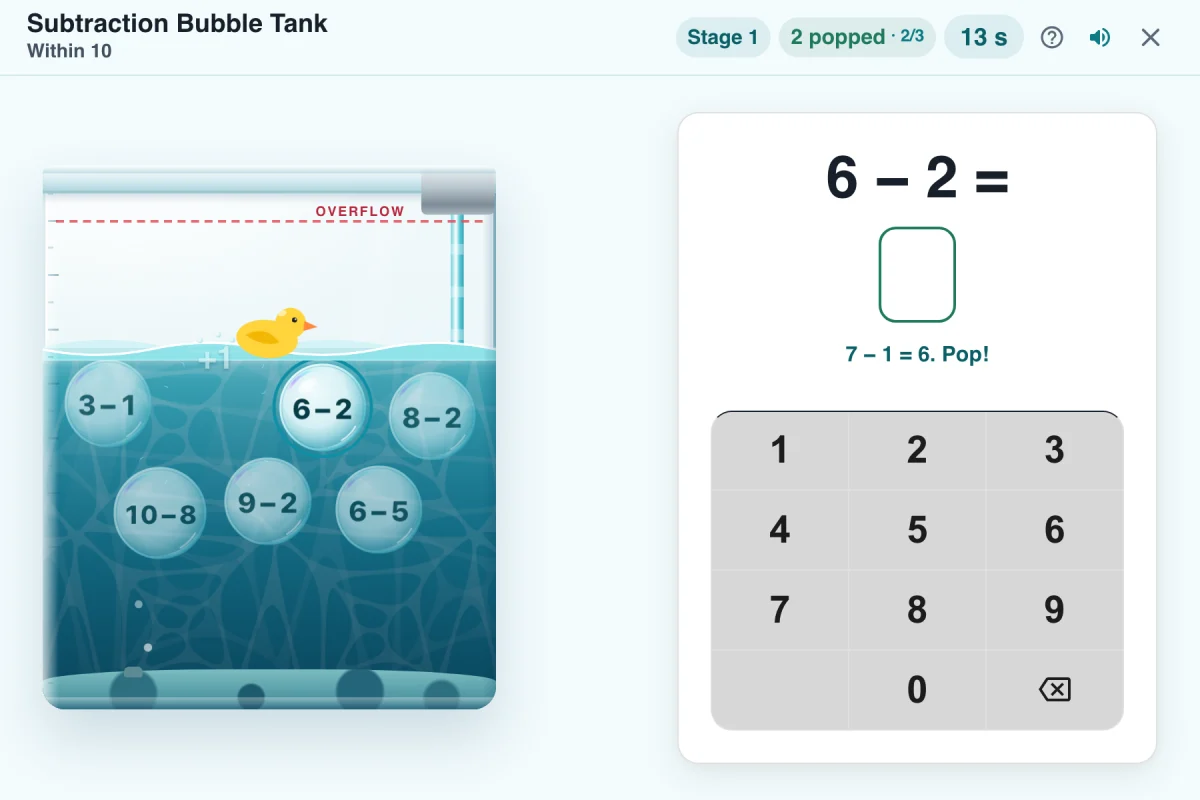
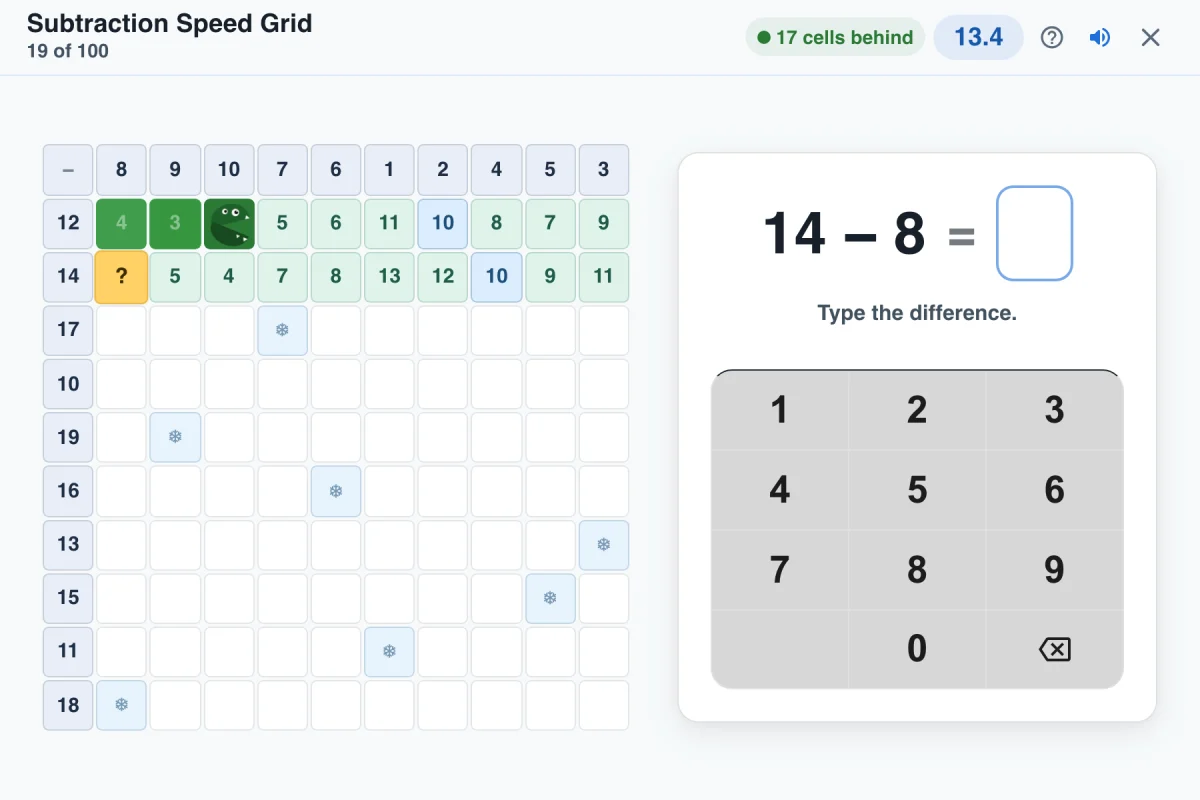
Play the subtraction games to see every game, a how-to-play walkthrough for each one, and its leaderboards.
Division games
Division games ask the same tables read backwards: not "what is 7 times 8" but "56 divided by 7." Bubble Tank offers a 2 through 9 set for a third grader meeting division facts for the first time and a 1 through 12 set for review, and every fact is drawn straight from the multiplication table so the two skills line up.
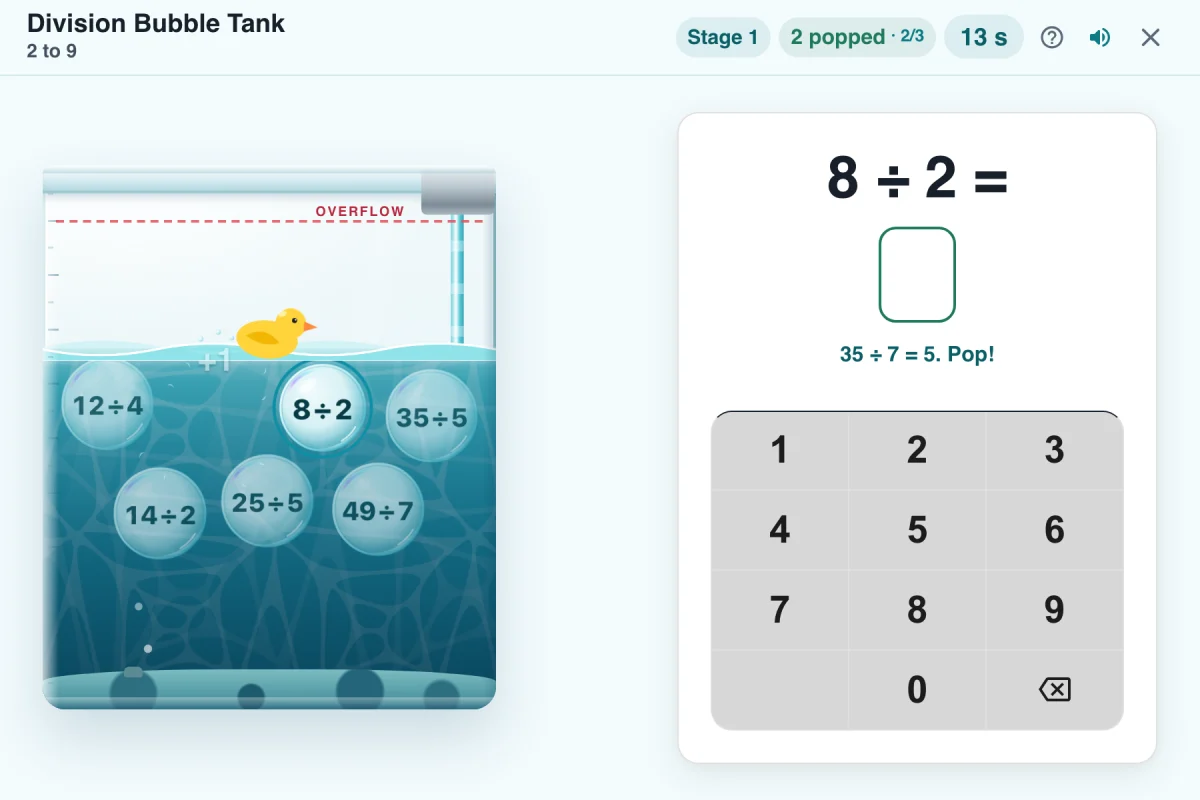
Play the division games to see every game, a how-to-play walkthrough for each one, and its leaderboards.
How to Pick a Game by Grade and Skill
Match the game to the facts a child is building, not to age alone. A kindergartener or first grader working on addition and subtraction within 10 should start there before moving to within 20 in first and second grade; going straight to a within-20 game before within-10 facts are quick just turns the round into counting on fingers against a clock. A third or fourth grader who knows what a times table is is ready for multiplication, and division fits once multiplication facts are solid, since every division fact here is the same table read backwards.
Inside an operation, let the fact set do the grading. The smaller set in each Bubble Tank (sums to 10, within 10, divisors 2 through 9) is the right start; move to the larger set (sums to 20, within 20, divisors 1 through 12) once rounds on the small set feel easy rather than tense.
What Makes These Games Different
Most math games online are a quiz with a cartoon on top: a prompt, a score, and a reward animation that does the motivating while the math waits. These games follow three rules instead. The fact is the move, so every second of play is a fact recalled, not a menu tapped. The board changes every round, whether that is a reshuffled grid, a new honeycomb, or a fresh order of bubbles, so a child cannot beat a game by memorizing a sequence instead of the facts. And a round is short, most under a minute, so it fits the start of a lesson or the five minutes before dinner without turning into a longer sit than anyone planned.
Speed also means something specific here. A child who answers 6 + 7 in two seconds is retrieving it; one who takes eight seconds is rebuilding it from 6 + 6 plus 1. Both get the answer right on a worksheet, but only the first survives a game with a rising tank or a chasing snake, and only the first is useful once that fact shows up buried inside a longer problem next year.
Games Alongside Daily Practice
A game is a good reason to practice and a fair test of what has stuck. It works alongside daily practice, not instead of it, and a child who keeps losing to the same fact learns mostly that the game is hard, not the fact itself. For addition and subtraction, the addition worksheets and subtraction worksheets build the facts a round then gets to show off. For multiplication and division, the times tables practice hub works one table at a time and the division facts practice page does the same for division. Inside Math Builders, slow facts come back on a spaced schedule until they are automatic, and a printed page still has a place: the printables library has generators for every operation when paper practice fits the moment better than a screen.
For Teachers
Every game on every hub runs full-width on a projector and needs only a keyboard, no logins and no roster to set up. A common routine is one round at the start of the math block with a different student on the keys each day and the rest of the class calling out answers. Because nothing needs a login, a substitute can run it from the link alone. For class-wide fact tracking without student email addresses, see Math Builders for teachers.
Frequently Asked Questions
Yes. Every game on this page and on every operation hub runs in the browser with no account, no download, and no in-app purchases. A Math Builders account is only for saving practice progress; the games do not need one.
Yes. Each game uses the same on-screen keypad Math Builders uses for practice, so it plays on a phone or tablet without opening the device keyboard. On a computer you can type with the number keys.
Addition and subtraction games fit kindergarten through second grade, working within 10 first and within 20 once that is solid. Multiplication and division games fit third and fourth grade, once a child knows what a times table is and is ready to build speed.
Start with the operation a child is practicing right now, not the one they enjoy least. Inside that hub, Bubble Tank is the gentler first game for most kids, and the Speed Grid or the Sixty Second Sweep suits a child who already answers most facts quickly.
No. A game is a fair test of what a child can recall under a little pressure, and a fun reason to want more practice. It does not, by itself, teach a fact that is still shaky. Short daily practice that revisits slow facts is what makes a fact automatic; the games show that work paying off.
Bubble Tank and the Speed Grid both keep leaderboards, ranked by day, week, month, and year. Posting is optional, a score needs a real round (not practice) to qualify, and the only identifying details are a nickname and an optional state or country. Real names, towns, and email addresses are never asked for or shown.
Yes. Every game runs full-width on a projector or a shared screen and needs only a keyboard, so a whole class can play one round together with a different student on the keys.