
Games You Can Play Now
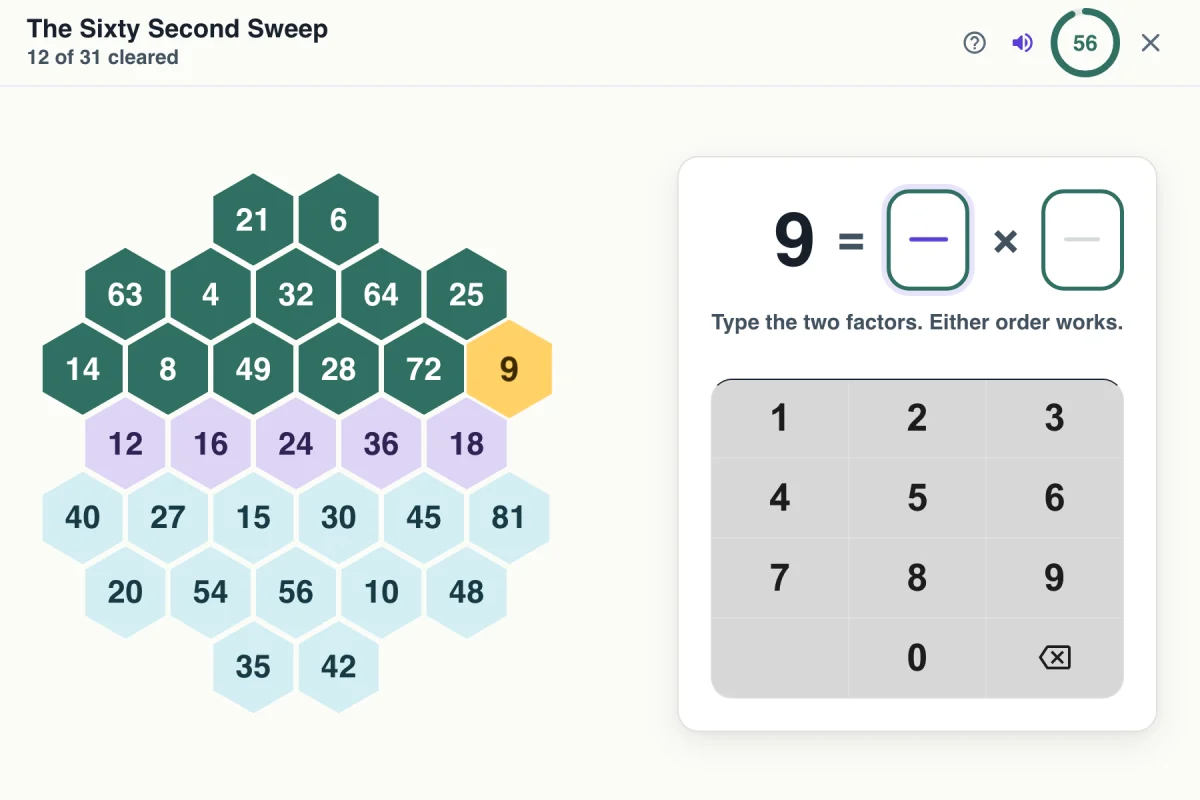
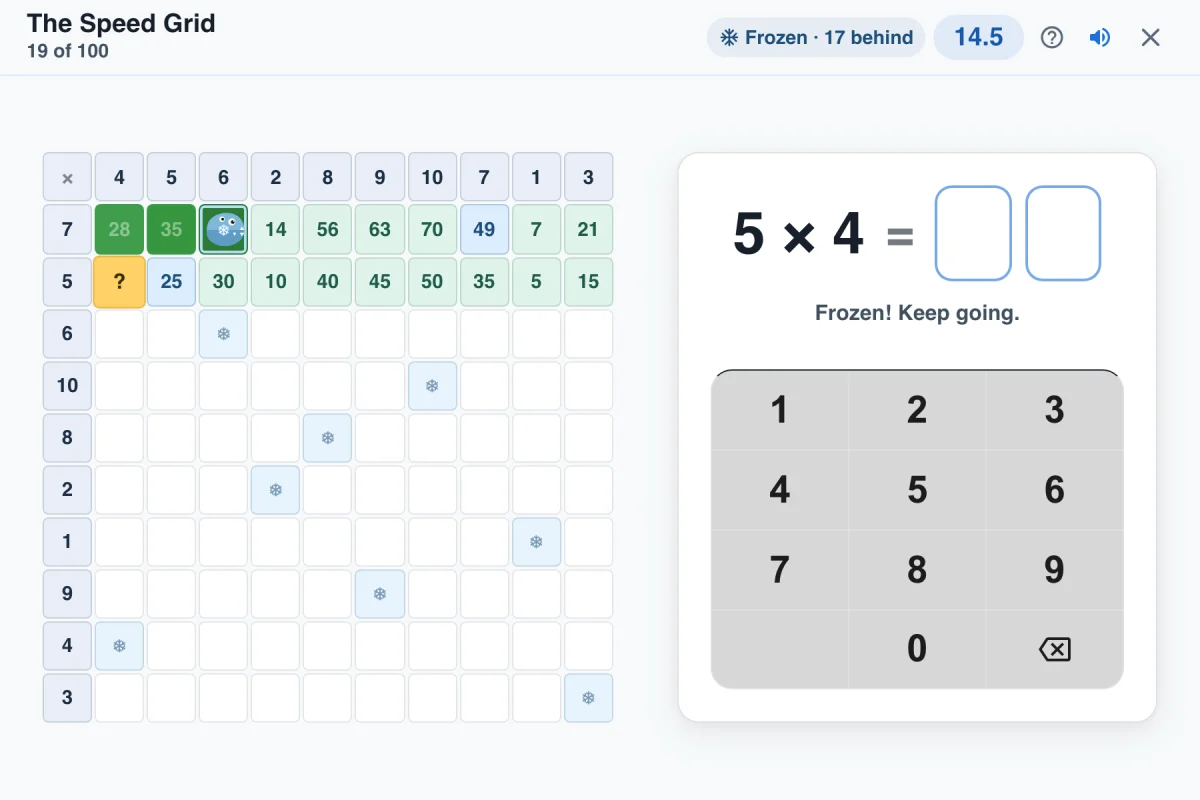
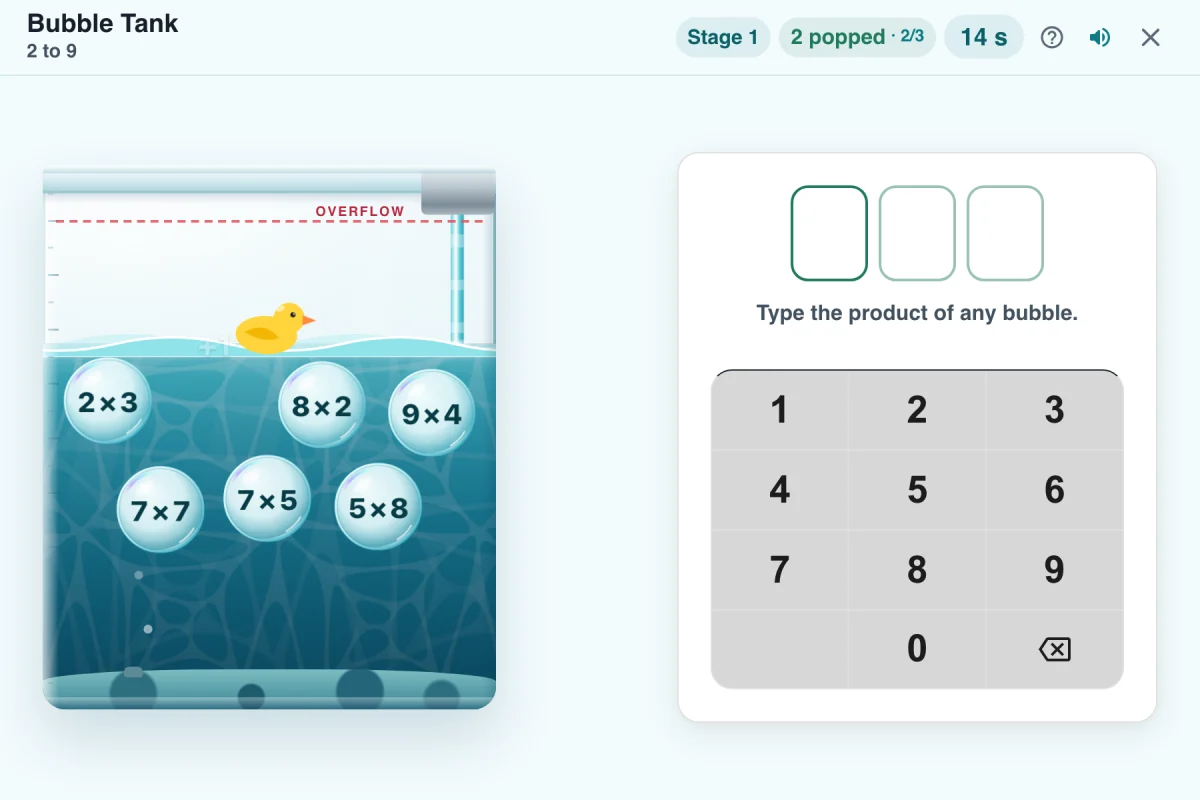
This page grows as games are added. Each new game gets its own page with a how-to-play section and a worked example of what to type, so a child can start without an adult reading instructions aloud.
What Makes a Multiplication Game Worth the Minutes
Most multiplication games online are a quiz with a cartoon on top: the same 7 × 8 prompt, a score, and a reward animation. The reward does the motivating and the math does the waiting. The games here follow three rules instead. The math is the game, so every second of play is a fact recalled. The board changes, so a learner cannot beat it by memorising a sequence. And a round is short, sixty seconds or less, so it fits the start of a lesson or the minute before dinner.
Speed matters here in a specific way. A learner who can answer 6 × 7 in two seconds is retrieving it; one who takes eight seconds is rebuilding it from 6 × 5 plus 12. Both get the answer right on a worksheet. Only the first survives a timed game, and only the first is useful inside a long-division problem a year later. That is why these games keep a clock, and why the clock is honest about what it measures.
Games Alongside Spaced Practice
A game shows what a learner knows under pressure. It does not, by itself, teach the facts that are missing, and a child who keeps losing to the same hexagon learns mostly that the game is hard. Use the games as the reward and the reason, and let short practice do the building. The times tables practice hub works one table at a time, the mixed multiplication facts practice flags slow facts, and the multiplication timed test records every response time so you can see which facts to work on next.
Inside Math Builders, those slow facts come back on a spaced schedule until they are automatic. The games sit on top of that: a quick way to feel the progress, and a fair test of whether the practice has stuck. If you want the longer explanation, read what multiplication fact fluency means and how to build it.
For Teachers
Every game runs full-width on a projector and needs only a keyboard. A common routine is one round at the start of the math block with a different student on the keys each day and the rest of the class calling factors. Because nothing needs a login, a substitute can run it from the link alone. For class-wide fact tracking without student email addresses, see Math Builders for teachers.
Games for the Other Operations
- Addition games
2 games
- Subtraction games
2 games
- Division games
1 game
Every game on Math Builders, for all four operations, is listed on the free math games page.
Frequently Asked Questions
Yes. Every game on this page runs in the browser with no account, no download, and no in-app purchases. A Math Builders account is only for saving practice progress; the games do not need one.
Yes. Each game uses the same on-screen keypad Math Builders uses for practice, so it plays on a phone or tablet without opening the device keyboard. On a computer you can type with the number keys.
The Sixty Second Sweep covers every product of the factors 2 through 9, the core of the table most third and fourth graders are working on. The Speed Grid and Bubble Tank let you choose 2 to 9 or the full 1 to 12. Addition, subtraction, and division have their own games pages, linked at the foot of this one.
No. A game is a good reason to practise and a fun way to show what a learner knows under pressure. Short daily practice that revisits slow facts is what builds the recall the game rewards.