
Why is Math Fact Fluency Important?
Math fact fluency is not just about speed. It is about automaticity. When students struggle with basic calculations, they often experience cognitive overload. By focusing on consistent math facts practice, students gain:
- Increased Confidence
No more math anxiety when a timed test appears.
- Better Problem Solving
Students can focus on the logic of a word problem rather than the calculation.
- Preparation for Higher Math
Mastery of the basics is essential for fractions, decimals, and beyond.
Effective Methods for Math Facts Practice
Not all practice is created equal. To keep students engaged, it is best to mix traditional methods with modern technology. If you are comparing tools for home practice, use the multiplication app buyer's checklist for kids to check whether an app measures recall, adapts to weak facts, and keeps sessions short enough to repeat.
1. The Power of Gamification
In 2026, students respond best to interactive environments. Digital platforms that turn multiplication tables into a leveling up experience can make practice feel less like a chore and more like a challenge.
2. Traditional Drills and Flashcards
While old school, flashcards are still effective for immediate feedback. To make them better:
- The 3-Pile System
Separate cards into Mastered, Learning, and Needs Work. Spend most of your time in Learning.
- Spaced Repetition
Revisit mastered facts on purpose so they stick in long-term memory. Use a real spaced repetition schedule for math facts, not random review.
3. Mental Math Strategies
Instead of rote memorization, teach strategies such as:
- Doubles Plus One
If you know 6 + 6 = 12, then 6 + 7 is one more.
- Making Tens
For 8 + 5, think of it as (8 + 2) + 3.
Tips for Parents and Teachers
Consistency beats intensity every time. Here is how to integrate math facts practice into a daily routine:
- Short Bursts
2 to 5 minutes of focused practice daily is more effective than an hour once a week.
- Real-World Application
Ask for math help while grocery shopping, like If these are $4 each and we need 3, how much is that?
- Track Progress
Use a simple chart to show how many more facts were mastered each week.
Helpful Resources
If you want to go deeper, these links can help you put math facts practice into action at home or in class.
- Resources
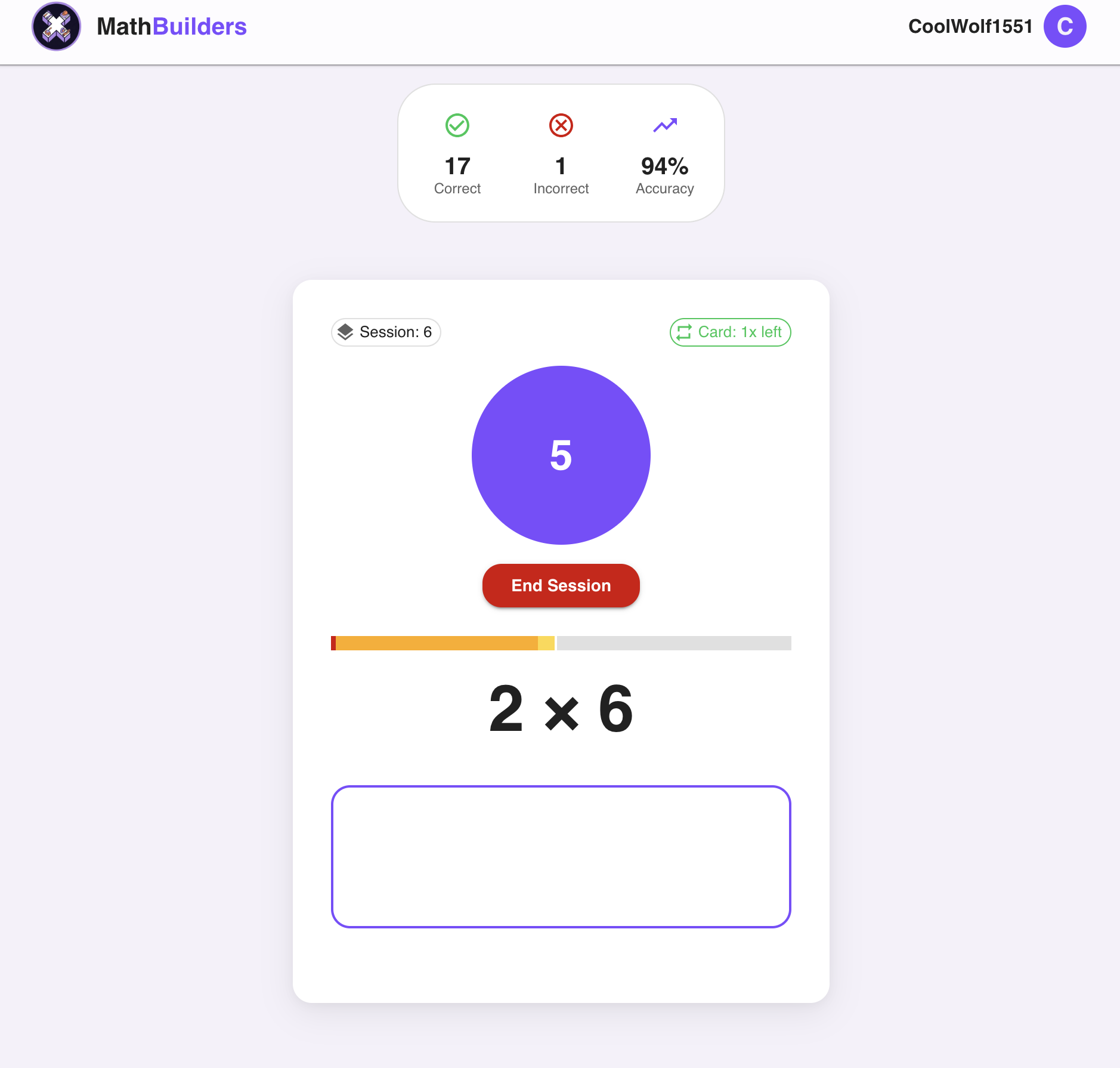
Start with our Learn Multiplication Guide and jump into daily practice in Training mode. If the main issue is facts being forgotten after a few days, read spaced repetition for math facts. For summer break, use the 5-minute summer math fact tracker to keep the routine small enough to repeat.
- Research and standards
See the National Council of Teachers of Mathematics (NCTM) and the What Works Clearinghouse (WWC) for evidence-informed classroom guidance.
Frequently Asked Questions
Most students begin focusing on addition and subtraction in first and second grade, moving to multiplication and division in third grade. However, exposure to numbers can start as early as preschool.
Incorporate movement. Use Math Twister or have students jump on the correct answer written in sidewalk chalk. Competition against themselves or a timer can also add excitement.
Timed tests can cause anxiety for some students. If a student is stressed, focus on personal bests rather than comparisons, or use untimed digital games that track speed behind the scenes.
Use a small routine instead of a long catch-up packet. Two to five minutes a day, 5 days a week, is enough to keep retrieval active and show which facts still need a quick review.